Welcome to the world of DevOps, where development meets operations in a seamless, powerful fusion of speed, efficiency, and innovation. If you’re curious about how top tech companies deploy code thousands of times a day, this guide is your ultimate roadmap.
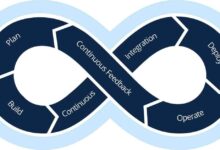
What Is DevOps? A Modern Approach to Software Delivery

DevOps is not just a buzzword; it’s a transformative cultural and technical movement that bridges the gap between software development (Dev) and IT operations (Ops). Born out of the need for faster, more reliable software releases, DevOps emphasizes collaboration, automation, and continuous improvement.
The Origins of DevOps
The term ‘DevOps’ first emerged around 2009, but its roots trace back to earlier agile and lean methodologies. Patrick Debois, a Belgian IT consultant, is widely credited with coining the term during a conference where frustrations over siloed teams sparked a movement.
- Agile software development laid the foundation for iterative delivery.
- Lean principles emphasized waste reduction and value stream optimization.
- Increased complexity in infrastructure demanded better collaboration.
The 2009 Velocity Conference was a turning point, where Debois organized a session titled ’10+ Deploys Per Day: Dev and Ops Cooperation at Flickr.’ This real-world example demonstrated that frequent deployments were possible with the right culture and tools.
“DevOps is not about a job title. It’s about a cultural shift that values people, processes, and tools equally.” — Jez Humble, Co-Author of ‘The DevOps Handbook’
Core Principles of DevOps
DevOps is built on several foundational principles that guide teams toward better outcomes. These principles are not just technical—they are cultural and organizational.
- Collaboration: Breaking down silos between development, QA, security, and operations teams.
- Automation: Automating repetitive tasks like testing, deployment, and monitoring to reduce errors and speed up delivery.
- Continuous Improvement: Using feedback loops to learn from failures and improve processes.
- Customer-Centric Action: Aligning software delivery with business goals and user needs.
These principles are interdependent. For example, automation enables faster feedback, which supports continuous improvement, which in turn enhances collaboration.
Why DevOps Matters: The Business Impact
Organizations that adopt DevOps practices report significant improvements in performance, employee satisfaction, and customer experience. According to the annual State of DevOps Report by Puppet and DORA (DevOps Research and Assessment), elite performers deploy code up to 973 times more frequently than low performers, with a lead time of less than an hour.
Speed and Efficiency in Software Delivery
One of the most tangible benefits of DevOps is the dramatic increase in deployment frequency. Traditional waterfall models might release software quarterly or annually. DevOps teams, by contrast, can deploy multiple times per day.
- Automated CI/CD pipelines eliminate manual bottlenecks.
- Infrastructure as Code (IaC) allows rapid provisioning of environments.
- Feature toggles enable safe, incremental rollouts.
For example, Amazon deploys new code every 11.7 seconds on average. This level of agility is only possible with robust DevOps practices.
Improved Reliability and Stability
Contrary to the myth that faster deployments mean more errors, DevOps actually improves system stability. Automated testing, continuous monitoring, and rapid rollback capabilities ensure that issues are caught early and resolved quickly.
- Mean Time to Recovery (MTTR) is significantly reduced.
- Change failure rate drops due to rigorous pre-deployment checks.
- Monitoring tools like Prometheus and Grafana provide real-time visibility.
Netflix, a pioneer in DevOps, uses chaos engineering tools like Chaos Monkey to proactively test system resilience, ensuring high availability even during failures.
“The goal is not to eliminate all failures—that’s impossible. The goal is to build systems that can withstand failure and recover quickly.” — Casey Rosenthal, Former Lead Engineer at Netflix
Key DevOps Practices You Need to Know
Successful DevOps implementation relies on a set of proven practices that work together to create a high-performing delivery pipeline. These practices are not optional—they are essential for achieving the promised benefits.
Continuous Integration (CI)
Continuous Integration is the practice of merging all developers’ working copies to a shared mainline several times a day. Each integration is verified by an automated build and test process.
- Reduces integration conflicts and bugs.
- Enables early detection of issues.
- Popular tools include Jenkins, GitHub Actions, and GitLab CI.
For instance, Google uses Blaze (now Bazel) to manage millions of lines of code with CI pipelines that run thousands of tests per change.
Continuous Delivery (CD)
Continuous Delivery extends CI by ensuring that code can be released to production at any time. It involves automated deployment pipelines that push changes through staging environments.
- Enables rapid, reliable releases.
- Supports canary releases and blue-green deployments.
- Tools like Spinnaker and Argo CD are widely used in enterprise environments.
Spotify uses a ‘squad’ model where autonomous teams manage their own CI/CD pipelines, allowing them to innovate quickly while maintaining quality.
Infrastructure as Code (IaC)
IaC treats infrastructure provisioning and configuration as code, enabling version control, repeatability, and automation. Instead of manually configuring servers, teams define infrastructure in declarative files.
- Tools like Terraform, Ansible, and AWS CloudFormation are industry standards.
- Ensures consistency across environments (dev, staging, prod).
- Facilitates disaster recovery and scalability.
For example, Airbnb uses Terraform to manage over 250,000 AWS resources, ensuring that infrastructure changes are auditable and reversible.
DevOps Tools: The Technology Stack Behind the Movement
No discussion of DevOps is complete without examining the tools that power it. The DevOps toolchain is vast, but certain categories and tools have become indispensable.
Version Control Systems
Version control is the backbone of DevOps. It allows teams to track changes, collaborate on code, and roll back when necessary.
- Git is the de facto standard, with platforms like GitHub, GitLab, and Bitbucket providing collaboration features.
- Branching strategies like GitFlow and trunk-based development support different release models.
- Code reviews and pull requests enhance code quality and knowledge sharing.
Microsoft, after acquiring GitHub, has integrated it deeply into its Azure DevOps suite, showcasing the strategic importance of version control.
Configuration Management and Automation
Managing server configurations manually is error-prone and unscalable. Configuration management tools automate this process.
- Ansible uses YAML-based playbooks for agentless automation.
- Puppet and Chef use declarative models to enforce system state.
- SaltStack offers high-speed remote execution and configuration.
Facebook uses a custom configuration management system to maintain consistency across millions of servers, highlighting the scalability of these tools.
Monitoring and Logging
You can’t improve what you can’t measure. Monitoring and logging are critical for understanding system behavior and diagnosing issues.
- Prometheus excels at real-time metrics collection and alerting.
- ELK Stack (Elasticsearch, Logstash, Kibana) is popular for log aggregation and analysis.
- Datadog and New Relic offer SaaS-based observability platforms.
Uber uses a custom observability platform built on top of open-source tools to monitor over 1,000 microservices in real time.
“Observability is not just about collecting data—it’s about asking questions you haven’t thought of yet.” — Charity Majors, CTO of Honeycomb
DevOps Culture: The Human Side of the Equation
While tools and processes are important, DevOps is fundamentally about people and culture. Without the right mindset, even the best tools will fail to deliver results.
Breaking Down Silos
Traditional IT organizations often operate in silos: developers write code, QA tests it, operations deploy it. This leads to finger-pointing and delays.
- DevOps encourages cross-functional teams where members share responsibility.
- Site Reliability Engineering (SRE), pioneered by Google, embodies this philosophy.
- Shared KPIs align teams toward common goals like uptime and deployment frequency.
At Etsy, developers are on call for their own code, fostering accountability and empathy for operational challenges.
Psychological Safety and Blameless Postmortems
A key aspect of DevOps culture is psychological safety—the belief that one can speak up without fear of punishment.
- Blameless postmortems focus on systemic issues, not individual mistakes.
- Teams analyze incidents to improve processes, not assign blame.
- Google’s Project Aristotle found psychological safety to be the top factor in team effectiveness.
For example, when a major outage occurs, Netflix conducts a detailed postmortem that is shared company-wide, turning failures into learning opportunities.
Continuous Learning and Feedback Loops
DevOps organizations embrace a growth mindset. They learn from both successes and failures.
- Retrospectives after sprints or incidents help teams reflect and improve.
- Feedback from monitoring, users, and stakeholders is integrated into the development cycle.
- Investing in training and certifications keeps teams up to date.
Amazon’s ‘Working Backwards’ process starts with a press release and FAQ, ensuring that customer feedback shapes product development from day one.
DevOps and Security: The Rise of DevSecOps
Security can no longer be an afterthought. DevSecOps integrates security practices into the DevOps pipeline, ensuring that applications are secure by design.
Shifting Security Left
‘Shifting left’ means addressing security early in the development lifecycle, rather than at the end.
- Static Application Security Testing (SAST) scans code for vulnerabilities during development.
- Dynamic Application Security Testing (DAST) tests running applications.
- Software Composition Analysis (SCA) identifies risks in open-source dependencies.
GitHub’s Code Scanning, powered by CodeQL, helps developers find security issues before they reach production.
Automated Security Testing
Manual security reviews are slow and inconsistent. Automation ensures that security checks are fast, repeatable, and scalable.
- Tools like SonarQube and Checkmarx integrate with CI/CD pipelines.
- Secrets scanning prevents accidental exposure of API keys and passwords.
- Compliance as Code enforces regulatory requirements automatically.
Capital One uses a fully automated security pipeline that runs over 100 security checks on every code commit.
Security as a Shared Responsibility
In DevSecOps, everyone is responsible for security—not just the security team.
- Developers receive training on secure coding practices.
- Security champions within teams act as advocates.
- Security policies are documented and accessible.
Microsoft’s Security Development Lifecycle (SDL) is a comprehensive framework that embeds security into every phase of development.
“Security is everyone’s job. If you’re writing code, you’re a security engineer.” — Troy Hunt, Security Expert and Creator of Have I Been Pwned
Challenges and Pitfalls in DevOps Adoption
Despite its benefits, DevOps adoption is not without challenges. Many organizations struggle to realize its full potential due to cultural, technical, and organizational barriers.
Resistance to Change
People are naturally resistant to change, especially when it affects job roles and workflows.
- Leadership must communicate the vision and benefits clearly.
- Training and mentoring help ease the transition.
- Pilot projects can demonstrate success and build momentum.
IBM found that organizations with strong executive sponsorship are 2.5 times more likely to succeed in DevOps transformation.
Tool Sprawl and Integration Complexity
The DevOps toolchain is vast, and choosing the wrong tools or failing to integrate them properly can lead to inefficiency.
- Too many tools create silos and cognitive overload.
- Lack of standardization hampers collaboration.
- Integration gaps can break the CI/CD pipeline.
A best practice is to start with a minimal viable toolchain and expand only when necessary.
Measuring Success: The Right Metrics
Without proper metrics, it’s hard to know if DevOps is working. Many teams focus on the wrong indicators.
- DORA metrics—Deployment Frequency, Lead Time for Changes, Change Failure Rate, and MTTR—are proven indicators of performance.
- Business metrics like customer satisfaction and revenue growth should also be tracked.
- Avoid vanity metrics like lines of code or number of commits.
According to the Google Cloud DevOps documentation, elite performers use these metrics to drive continuous improvement.
What is DevOps?
DevOps is a set of practices, cultural philosophies, and tools that combine software development (Dev) and IT operations (Ops) to shorten the software development lifecycle and deliver high-quality software continuously.
What are the key benefits of DevOps?
The key benefits include faster time to market, improved deployment frequency, lower change failure rates, quicker recovery from failures, enhanced collaboration, and greater alignment between business and IT goals.
What are the four DORA metrics?
The four key DevOps metrics, as defined by DORA (DevOps Research and Assessment), are Deployment Frequency, Lead Time for Changes, Change Failure Rate, and Mean Time to Recovery (MTTR).
How does DevOps improve security?
DevOps improves security through DevSecOps, which integrates security into the CI/CD pipeline. This includes automated security testing, shifting security left, and fostering a culture where security is a shared responsibility.
What are common DevOps tools?
Common DevOps tools include Git (version control), Jenkins (CI/CD), Docker (containerization), Kubernetes (orchestration), Terraform (IaC), Ansible (configuration management), Prometheus (monitoring), and SonarQube (code quality and security).
DevOps is more than a methodology—it’s a cultural revolution that empowers organizations to innovate faster, deliver better software, and respond to change with agility. From its origins in agile and lean thinking to its current role as a cornerstone of digital transformation, DevOps continues to evolve. By embracing collaboration, automation, and continuous learning, teams can overcome challenges and achieve elite performance. The journey isn’t easy, but the rewards—speed, reliability, and customer satisfaction—are well worth the effort.
Further Reading:
