Imagine building powerful apps without managing a single server. That’s the magic of serverless computing—flexible, scalable, and cost-efficient. Welcome to the future of cloud development.

What Is Serverless Computing?
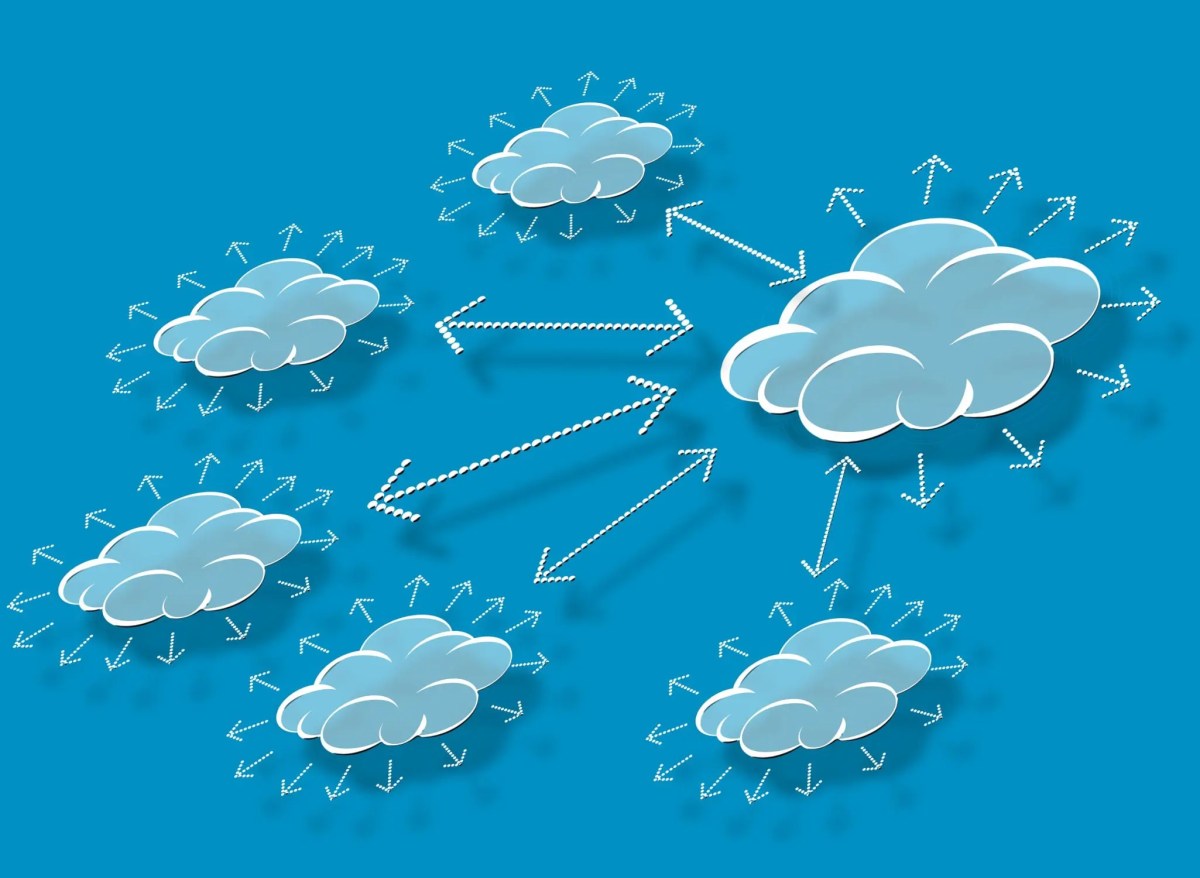
Despite its name, serverless computing doesn’t mean there are no servers. Instead, it refers to a cloud computing model where the cloud provider dynamically manages the infrastructure, automatically allocating resources as needed. Developers simply deploy code, and the platform handles the rest—scaling, maintenance, and server provisioning.
No Server Management Required
One of the most transformative aspects of serverless computing is the elimination of server management. Traditionally, developers and DevOps teams spent significant time configuring, patching, and monitoring servers. With serverless, these responsibilities shift entirely to the cloud provider.
- Developers focus solely on writing application logic.
- No need to provision or scale virtual machines.
- Automatic OS updates and security patches are handled by the provider.
This shift allows engineering teams to move faster and innovate more efficiently, reducing time-to-market for new features.
Event-Driven Architecture
Serverless computing is inherently event-driven. Functions are triggered by specific events—such as an HTTP request, a file upload to cloud storage, or a message arriving in a queue. This makes it ideal for microservices, real-time data processing, and backend logic for mobile and web apps.
- Functions run in response to events and terminate when done.
- Supports asynchronous workflows and background processing.
- Integrates seamlessly with services like AWS S3, Google Cloud Pub/Sub, and Azure Event Hubs.
“Serverless allows developers to think in terms of functions and events, not servers and clusters.” — Martin Fowler, Chief Scientist at ThoughtWorks
How Serverless Computing Works
At its core, serverless computing operates on a Function-as-a-Service (FaaS) model. Developers write small, stateless functions that are executed in ephemeral containers. These functions are invoked by triggers and run only when needed, scaling from zero to thousands of instances in seconds.
The Role of Function-as-a-Service (FaaS)
FaaS is the backbone of serverless computing. Platforms like AWS Lambda, Google Cloud Functions, and Azure Functions allow developers to upload code snippets—functions—that execute in response to events.
- Each function is isolated and runs in a secure environment.
- Execution time is limited (e.g., AWS Lambda caps at 15 minutes).
- Functions are stateless; persistent data must be stored externally (e.g., databases, object storage).
FaaS abstracts away infrastructure complexity, enabling rapid deployment and iteration. For example, a developer can deploy a function to resize images uploaded to cloud storage without writing any server-side code.
Execution Lifecycle and Cold Starts
Understanding the lifecycle of a serverless function is crucial for performance optimization. When a function is invoked for the first time or after a period of inactivity, the platform must initialize a container—a process known as a ‘cold start.’
- Cold starts introduce latency, especially for functions with large dependencies.
- Subsequent invocations (warm starts) are significantly faster.
- Techniques like provisioned concurrency (AWS) or keeping functions warm can mitigate cold start delays.
Monitoring tools like AWS CloudWatch or Datadog help track invocation metrics, duration, and error rates, enabling developers to fine-tune performance.
Top Benefits of Serverless Computing
Serverless computing offers a compelling set of advantages that make it a go-to choice for modern application development. From cost savings to scalability, the benefits are both technical and financial.
Cost Efficiency and Pay-Per-Use Pricing
One of the most attractive features of serverless computing is its pricing model. Unlike traditional cloud servers that charge by the hour, serverless platforms charge based on the number of executions and the duration of each function.
- You only pay when your code runs—no charges for idle time.
- Ideal for applications with variable or unpredictable traffic.
- Reduces operational costs by eliminating the need for always-on servers.
For example, a startup launching a new app can avoid upfront infrastructure costs and scale seamlessly as user demand grows.
Automatic Scalability
Serverless platforms automatically scale functions in response to incoming traffic. Whether you receive one request per day or a million per second, the system handles it without manual intervention.
- Each function invocation runs in an isolated environment.
- Scaling is granular—each request can trigger a new instance.
- No need to configure load balancers or auto-scaling groups.
This elasticity is particularly beneficial for applications experiencing sudden traffic spikes, such as flash sales or viral content.
Reduced Time-to-Market
By removing infrastructure management from the equation, serverless computing accelerates development cycles. Teams can deploy features faster, experiment more freely, and respond quickly to market changes.
- Smaller codebases are easier to test and deploy.
- CI/CD pipelines integrate smoothly with serverless platforms.
- Developers can focus on business logic rather than system administration.
Companies like Netflix and Coca-Cola have leveraged serverless to launch new services rapidly and maintain agility in competitive markets.
Common Use Cases for Serverless Computing
Serverless computing is not a one-size-fits-all solution, but it excels in specific scenarios where event-driven processing, scalability, and cost-efficiency are critical.
Real-Time File Processing
When users upload images, videos, or documents to cloud storage, serverless functions can automatically process them. For instance, a function can resize an image, extract metadata, or convert a video format.
- Triggered by file upload events in services like AWS S3 or Google Cloud Storage.
- Enables real-time transformations without backend servers.
- Used in photo-sharing apps, document management systems, and media platforms.
This pattern reduces latency and ensures consistent processing across all uploads.
Web and Mobile Backends
Serverless is ideal for building lightweight, scalable backends for web and mobile applications. APIs powered by serverless functions can handle user authentication, data retrieval, and form submissions.
- API Gateway services (e.g., AWS API Gateway) route HTTP requests to Lambda functions.
- Functions interact with databases like DynamoDB or Firestore.
- Supports JWT-based authentication and secure data access.
Startups and indie developers benefit from low overhead and rapid deployment, enabling them to launch MVPs quickly.
Data Processing and ETL Pipelines
Serverless functions are increasingly used for Extract, Transform, Load (ETL) operations. They can process streaming data from IoT devices, logs, or user activity and load it into data warehouses for analysis.
- Integrates with services like AWS Kinesis, Google Cloud Dataflow, or Azure Stream Analytics.
- Processes data in near real-time, enabling timely insights.
- Cost-effective for batch processing jobs that run intermittently.
For example, a retail company might use serverless functions to aggregate sales data every hour and update dashboards automatically.
Challenges and Limitations of Serverless Computing
While serverless computing offers many advantages, it’s not without challenges. Understanding these limitations is crucial for making informed architectural decisions.
Vendor Lock-In Concerns
Serverless platforms are tightly integrated with their respective cloud ecosystems. Migrating functions from AWS Lambda to Google Cloud Functions, for example, often requires significant code changes due to differences in APIs, triggers, and configuration.
- Lack of standardization across providers increases migration complexity.
- Using proprietary services (e.g., AWS Step Functions) deepens dependency.
- Multicloud strategies are harder to implement in serverless environments.
To mitigate this, developers can adopt frameworks like the Serverless Framework or AWS SAM, which promote portability and reusable templates.
Debugging and Monitoring Complexity
Debugging serverless applications can be more challenging than traditional apps. Since functions are ephemeral and distributed, traditional debugging tools may not work effectively.
- Logs are scattered across multiple services and regions.
- Real-time debugging is difficult due to the stateless nature of functions.
- Performance issues may stem from cold starts or misconfigured timeouts.
Tools like AWS CloudWatch, Google Cloud Monitoring, and third-party solutions like Datadog help centralize logs and provide observability.
Execution Time and Resource Limits
Serverless platforms impose limits on execution duration, memory, and deployment package size. These constraints can restrict the types of workloads suitable for serverless.
- AWS Lambda functions can run up to 15 minutes.
- Maximum memory allocation is typically 10 GB.
- Deployment packages are limited to 250 MB (unzipped).
Long-running tasks like video encoding or machine learning training may require workarounds or alternative architectures.
Serverless vs. Traditional Server-Based Architectures
Comparing serverless computing with traditional server-based models highlights fundamental differences in cost, scalability, and operational overhead.
Infrastructure Management
In traditional architectures, teams are responsible for managing virtual machines, containers, or physical servers. This includes provisioning, patching, monitoring, and scaling.
- Requires dedicated DevOps resources.
- Risk of over-provisioning or underutilization.
- Scaling requires manual or automated configuration of load balancers and auto-scaling groups.
In contrast, serverless computing abstracts all infrastructure management, allowing developers to focus purely on code.
Cost Comparison
Traditional servers incur costs 24/7, regardless of usage. A VM running at 10% utilization still costs the same as one at 90%.
- Serverless costs are directly tied to usage—ideal for sporadic workloads.
- High-traffic applications may become more expensive on serverless due to per-invocation fees.
- Total cost of ownership (TCO) must consider development speed and operational efficiency.
For many startups and small teams, the reduced operational burden outweighs higher per-invocation costs.
Performance and Latency
While serverless offers excellent scalability, cold starts can introduce latency. Traditional servers, once warmed up, provide consistent response times.
- Serverless is ideal for APIs with variable traffic.
- Always-on servers are better for low-latency, high-frequency requests.
- Hybrid models (e.g., API Gateway + Lambda + EC2 for warm services) can balance performance and cost.
The choice depends on the application’s performance requirements and traffic patterns.
The Future of Serverless Computing
Serverless computing is evolving rapidly, with new features, tools, and best practices emerging to address current limitations and expand its applicability.
Advancements in Cold Start Optimization
Cloud providers are investing heavily in reducing cold start times. Techniques like container reuse, pre-warmed environments, and custom runtimes are improving performance.
- AWS Lambda now supports provisioned concurrency for predictable workloads.
- Google Cloud Functions offers faster cold starts with newer runtimes.
- Open-source projects like OpenFaaS enable fine-tuned control over function execution.
As cold start latency decreases, serverless becomes viable for more latency-sensitive applications.
Serverless Databases and Storage
The ecosystem is expanding beyond compute. Serverless databases like Amazon DynamoDB, Google Firestore, and Azure Cosmos DB offer automatic scaling and pay-per-request pricing.
- Eliminates the need to manage database servers.
- Scales seamlessly with application demand.
- Integrates natively with serverless functions.
This convergence enables truly serverless architectures, where every component scales independently and automatically.
Broader Enterprise Adoption
Enterprises are increasingly adopting serverless for mission-critical applications. Improved security, compliance, and monitoring tools are making serverless more enterprise-ready.
- Support for VPCs, private endpoints, and encryption at rest.
- Integration with identity and access management (IAM) systems.
- Enhanced observability with distributed tracing and logging.
As tooling matures, serverless is moving from experimental projects to core business systems.
What is serverless computing?
Serverless computing is a cloud model where developers deploy code without managing servers. The cloud provider handles infrastructure, scaling, and maintenance automatically.
Is serverless computing really free of servers?
No, servers still exist, but they are fully managed by the cloud provider. Developers don’t interact with them directly, hence the term ‘serverless.’
What are the main drawbacks of serverless?
Key challenges include cold starts, vendor lock-in, debugging complexity, and execution time limits. Careful design and tooling can mitigate many of these issues.
Can serverless handle long-running tasks?
Most serverless platforms limit execution time (e.g., 15 minutes on AWS Lambda). For longer tasks, consider batch processing, step functions, or hybrid architectures.
Which companies use serverless computing?
Companies like Netflix, Coca-Cola, Airbnb, and The Guardian use serverless for scalable, cost-effective applications ranging from data processing to real-time APIs.
Serverless computing is reshaping how we build and deploy software. By abstracting infrastructure, it empowers developers to focus on innovation rather than operations. While challenges like cold starts and vendor lock-in remain, continuous advancements are making serverless more powerful and accessible. Whether you’re a startup launching an MVP or an enterprise modernizing legacy systems, serverless offers a compelling path to agility, scalability, and efficiency. The future of cloud computing isn’t just serverless—it’s inevitable.
Recommended for you 👇
Further Reading:
